
What Is the Legal Tyre Tread Depth in New Zealand?
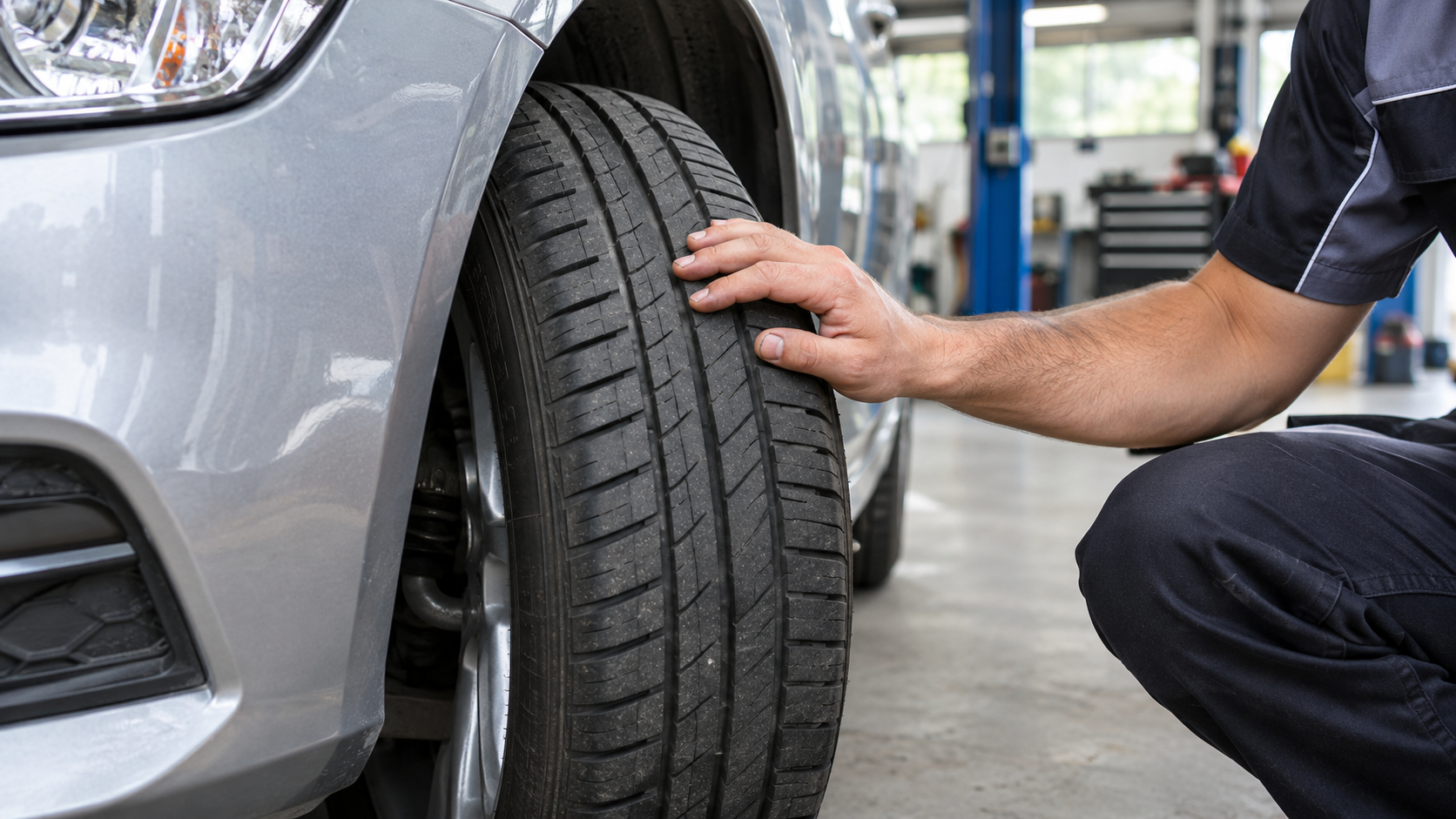
The legal minimum tyre tread depth in New Zealand is 1.5mm, measured in every main groove that carries a moulded tread wear indicator, all the way around the tyre. If a tyre has no indicators, the tread must be at least 1.5mm deep across at least three quarters of its width. Winter tyres have a higher minimum of 4mm. A tyre below these limits fails a Warrant of Fitness. Legal does not mean safe, though. Wet road grip drops away well before a tyre reaches 1.5mm, so it pays to check your tyre tread depth in NZ conditions regularly and replace tyres before they reach the limit.
What the Law Actually Says
The rule sits in the NZ Transport Agency (NZTA) Vehicle Inspection Requirements Manual, which WOF inspectors work from. For a car that can travel faster than 30km/h, a standard tyre must have a tread depth of at least 1.5mm. Inspectors do not count the tie bars or the tread wear indicators themselves when they measure.
Where you measure matters. The 1.5mm must be present in all the principal grooves, meaning the main grooves that normally contain moulded tread depth indicators. It must also hold around the full circumference of the tyre, so one worn patch is enough to fail.
Some tyres do not carry indicators at all. For those, the tread must be at least 1.5mm deep across at least three quarters of the tread width, again all the way around.
Winter tyres are held to a higher standard. They need at least 4mm of tread in all principal grooves, because they rely on deep tread to grip on snow and ice.
How to Find the Tread Wear Indicators on Your Tyres
Almost every modern car tyre has tread wear indicators built in. These are small raised bars of rubber moulded into the bottom of the main grooves, sitting across the groove rather than along it. On a new tyre they sit well below the surface of the tread.
To find them, look at the sidewall near the edge of the tread. You will usually see a small triangle or the letters TWI (tread wear indicator) repeated at several points around the tyre. Follow each marker across to the tread and you will find a bar in the groove beside it.
As the tyre wears, the tread moves closer to these bars. When the surface of the tread is flush with an indicator bar, that part of the tyre is at the legal limit of 1.5mm. Check several points around each tyre, not just one, because tyres rarely wear evenly. If any indicator is flush with the tread, the tyre needs replacing.
How to Check Your Tyre Tread at Home
You can check your own tyres in a few minutes, with the car parked on flat ground.
Start with the tread wear indicators. If the tread is level with any of the bars, the tyre is at or below 1.5mm and should be replaced. If the bars are still clearly below the surface, move on to a measurement.
A tread depth gauge, sold at most auto parts stores, is the accurate method. Push the probe into a main groove, press the body flat against the tread, and read the depth. Measure the inner, centre and outer grooves at several points around the tyre, then repeat on every tyre.
A 20 cent coin gives a rough guide only. Push it into a main groove near the centre of the tyre. Tyre Safety NZ notes the base of the number 20 sits about 2mm from the coin's edge, so if you can see the whole number, the tread is getting low. Treat this as an indicative check, not a legal measurement.
Why 1.5mm Is the Legal Minimum, Not the Safe Minimum
The 1.5mm figure is the point at which a tyre becomes illegal. It is not the point at which a tyre stops performing well. NZTA puts it plainly: the more tread you have, the better the grip and the safer you will be.
Tread grooves exist to clear water from under the tyre so the rubber stays in contact with the road. As the grooves get shallower, they move less water. On a wet road that means longer stopping distances and a greater risk of aquaplaning, where a film of water lifts the tyre off the surface and the driver loses steering and braking. The effect grows with speed.
This loss of grip builds gradually as the tread wears, long before the indicator bars show.
Tyre Safey NZ advises that wet grip falls significantly once tread drops below 3mm. If you do a lot of wet weather or open road driving, replacing tyres before they reach the legal limit is the safer choice.
What Uneven Tyre Wear Is Telling You
Tyres that wear unevenly are usually pointing to a problem elsewhere on the car, and the pattern tells you where to look.
Wear on both outer shoulders, with a healthier centre, usually means the tyre has been running under inflated. Wear down the centre of the tread, with the shoulders intact, usually points to over inflation.
Wear on only one shoulder, either the inner or outer edge, is a common sign of wheel alignment that is out of specification. Feathering, where the tread blocks feel smooth one way and sharp the other when you run your hand across them, also usually points to alignment. Patchy, scalloped dips around the tyre can indicate worn shock absorbers or suspension parts that let the wheel bounce.
Replacing the tyre alone will not fix the cause, and a new tyre will wear the same way. A wheel alignment check will find alignment faults, and worn suspension and shock absorbers can be inspected at the same time.
How Tyre Pressure Affects Tread Wear
Correct pressure keeps the full width of the tread in contact with the road, so the tyre wears evenly and grips as designed. Too little pressure overloads the shoulders, and too much concentrates wear down the centre.
So what tyre pressure should your car be running? The correct figure for your vehicle is on a placard, usually inside the driver's door frame, and in the owner's handbook. Some vehicles also list it inside the fuel flap. Do not use the number moulded into the tyre sidewall. That is the maximum pressure the tyre can safely hold, not the pressure your car needs.
Check pressures when the tyres are cold, before a drive or after the car has been parked for a few hours, because pressure rises as tyres warm up. A monthly check at a service station air pump is a good habit, and check again before a long trip or when carrying a heavy load. NZTA notes that correct tyre pressure can also cut fuel use by up to 4%.
Tyre Age Matters as Well as Tread
A tyre can have plenty of legal tread and still be past its best. Rubber hardens and cracks over time, whether the tyre is being driven on or sitting on a spare wheel. Tyres on cars that do low kilometres, and spare tyres, often age out before they wear out.
You can tell when a tyre was made from the date code on its sidewall. Look for the letters DOT followed by a string of characters. The last four digits show the week and year of manufacture, so 2321 means the 23rd week of 2021.
How long tyres last depends on how they are driven, how well they are inflated and aligned, and how they are stored, so there is no single answer. Check your tyre manufacturer's guidance for their recommended service life. Look for fine cracks in the sidewall or between the tread blocks, and have any tyre with visible perishing checked, because significant perishing is also a reason for a tyre to fail its WOF.
Tyres and Your WOF
Tyres are one of the checks in every Warrant of Fitness inspection. As well as measuring tread depth, the inspector looks for bulges, deep cuts or cracks that reach the cords, exposed cords, and significant perishing. Tyres on the same axle also need to match in size, construction type and tread pattern type. For the full picture of what an inspection covers, see our WOF inspection page.
Why Tread Depth Matters on New Zealand Roads
New Zealand driving puts tyres through a lot. Rain is a regular part of winter and spring across most of the country, and wet roads are exactly where worn tread shows its weakness first. Many regions also have long stretches of open road where traffic travels at up to 100km/h, and the risk of aquaplaning rises with speed.
Rural drivers face their own conditions. Unsealed gravel roads are hard on tread and sidewalls, and loose surfaces demand all the grip a tyre can offer. In alpine and southern areas, drivers who fit winter tyres need to keep an eye on the higher 4mm minimum.
Distance adds to the stakes. On a long state highway run between towns, a tyre problem can leave you a long way from help. Checking tread and pressure before a trip takes minutes and lowers that risk.
Get Your Tyres Checked at Your Nearest Auto Super Shoppe
If your tread is close to the indicator bars, your tyres are wearing unevenly, or you cannot remember when they were last checked, a quick look from a qualified mechanic will tell you where you stand. Our team can measure tread depth on every tyre, check pressures and condition, and explain what needs attention now and what can wait. When it is time for new tyres, we can help with that too.
Find your closest workshop at autosupershoppes.co.nz or call 0800 AUTO HELP (0800 288 643). With 120+ MTA Approved workshops from Northland to Invercargill, there is a Shoppe near you.

Frequently Asked Questions
What is the legal tyre tread depth in New Zealand?
The legal minimum tread depth for a standard car tyre in New Zealand is 1.5mm. It must be present in all the principal grooves that contain moulded tread wear indicators, around the full circumference of the tyre. On a tyre without indicators, the tread must be at least 1.5mm deep across at least three quarters of the tread width. Winter tyres have a higher minimum of 4mm.
Will my car fail its WOF on tyre tread?
Your car will fail its WOF if any tyre has less than 1.5mm of tread in its principal grooves at any point around the tyre, or less than 4mm on a winter tyre. Inspectors also fail tyres with bulges, cuts or cracks that reach the cords, exposed cords, or significant perishing. Tyres on the same axle must match in size, construction type and tread pattern type.
How do I check my tyre tread depth without a gauge?
The simplest way is to use the tread wear indicators moulded into the tyre's main grooves. Find them by following the small triangle or TWI markings on the sidewall across to the tread. If the tread surface is flush with an indicator bar, the tyre is at the legal limit. A 20 cent coin placed in a groove gives a rough guide, but it is only an indicative check and not a legal measurement.
Do tyres need replacing at 1.5mm or sooner?
Tyres must be replaced before they go below 1.5mm, but replacing them sooner is usually the safer choice. Tread grooves clear water from under the tyre, and that ability falls away as the tread wears, well before the legal limit. Tyre Safety NZ advises that wet grip drops significantly below 3mm. If you drive often in the wet or on the open road, plan to replace tyres before they reach 1.5mm.
What is the minimum tread depth for winter tyres in NZ?
A winter tyre in New Zealand must have at least 4mm of tread in all principal grooves to pass a WOF. That is higher than the 1.5mm minimum for standard tyres, because winter tyres depend on deep tread and siping to grip on snow and ice. Tie bars and tread wear indicators are not counted when the depth is measured.
Can tyres be too old even with good tread?
Yes. Rubber hardens and cracks with age, even on a tyre that has done few kilometres or has sat unused as a spare. You can find a tyre's age from the last four digits of the DOT code on the sidewall, which show the week and year it was made. Check the tyre manufacturer's guidance on service life, and have any tyre with visible cracking or perishing checked.
Can I have different tyres on the same axle?
No, the tyres on the same axle need to match for your car to pass its WOF. They must share the same size designation, the same carcass type and the same type of tread pattern. Mismatched tyres can grip and respond differently from side to side, which affects braking and handling. The tyres on the front axle can differ from the rear, as long as each pair matches.
This article was written by the Auto Super Shoppes team. Auto Super Shoppes is New Zealand's largest network of MTA Approved automotive workshops, with 120+ locally owned Shoppes nationwide.


